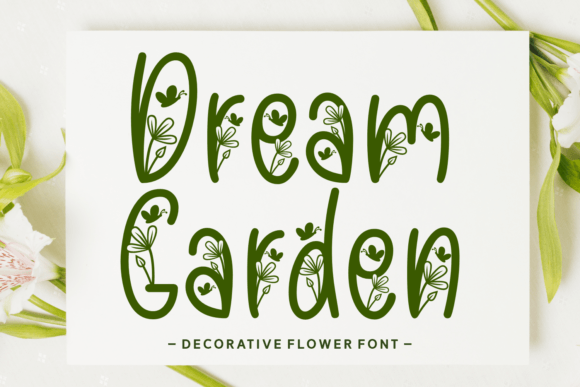
Dream Garden Font for Editorial Design
Dream Garden is a floral decorative font that brings a soft, organic feel to any design project. Its delicate ornaments and flowing curves make it ideal for nature-themed content, adding a touch of whimsy and elegance. Whether you're designing a blog header, a magazine cover, or a printable guide, Dream Garden offers a unique visual identity that enhances readability and engagement.
This font is particularly well-suited for editorial design, where the tone and style of typography play a key role in shaping the reader's experience. Dream Garden’s personality is both charming and versatile, making it a valuable addition to your design toolkit. It works well for headings, pull quotes, and section titles, offering a balance between artistic flair and clarity.
Using Dream Garden in Editorial Projects
In blog headers, Dream Garden can draw attention while maintaining a cohesive aesthetic. For example, a lifestyle blog about gardening or wellness might use the font for post titles to create a welcoming and inviting look. When paired with a clean serif or sans serif font for body text, it helps establish a clear visual hierarchy without overwhelming the reader.
Magazine covers often rely on bold, eye-catching typography to stand out on newsstands or digital platforms. Dream Garden can be used for headlines or subheadings, especially in publications focused on nature, travel, or personal development. Its ornamental details add a sense of sophistication, making it a great choice for premium content.
For ebook titles and chapter openers, Dream Garden adds a refined touch that complements the content’s theme. A recipe ebook, for instance, could use the font for title pages and section headings, reinforcing the idea of creativity and care in each dish. The font’s subtle variations also allow for consistent branding across different formats, from print to digital.
Designing with Dream Garden
When using Dream Garden in layouts, consider its impact on readability. While it excels as a display font, it may not be suitable for long blocks of text due to its intricate details. Instead, use it for short phrases, such as quote graphics, social media captions, or lead magnets. This ensures the font remains legible while still contributing to the overall design.
In newsletter graphics, Dream Garden can highlight key messages or featured content. A weekly newsletter about mindfulness or self-care might use the font for subject lines or callout boxes, creating a warm and approachable tone. Pairing it with a simple sans serif font for the body copy keeps the layout clean and easy to read.
Printable guides and worksheets benefit from Dream Garden’s visual appeal. A wedding planning checklist or a coaching workbook could incorporate the font for headings and instructions, adding a personal and creative element. Its soft, flowing style supports a relaxed and positive mood, which is essential for user-friendly designs.
Font Pairing and Visual Consistency
Pairing Dream Garden with other fonts enhances its effectiveness in editorial work. A readable serif font like Georgia or Times New Roman can serve as a strong contrast for body text, ensuring clarity without sacrificing style. For modern designs, a clean sans serif like Open Sans or Lato provides a balanced complement, especially for captions, navigation elements, or sidebars.
When working with multilingual content, check if Dream Garden includes support for additional characters and diacritics. This ensures the font remains functional and aesthetically pleasing across different languages and regions. For designers who work with international audiences, this detail can make a significant difference in the final output.
Commercial licensing is an important consideration when using Dream Garden in published materials. If you’re creating ebooks, templates, or paid newsletters, verify that the font allows for such use. Many free fonts come with restrictions, so understanding the terms ensures your project remains compliant and professional.
Applying Dream Garden to Different Content Types
Dream Garden shines in projects that require a personal and artistic touch. A digital magazine focused on home decor might use the font for article titles and section dividers, reinforcing the theme of creativity and style. Similarly, a printable planner for artists or writers could incorporate the font for daily prompts or motivational quotes, enhancing the user’s experience.
For social media graphics, Dream Garden adds a playful yet polished look. A fitness coach’s Instagram post or a food blogger’s Pinterest pin could feature the font in headlines or captions, drawing attention while maintaining a cohesive brand image. Its versatility makes it suitable for both casual and professional settings.
When designing for mobile layouts, ensure that Dream Garden scales well on smaller screens. Test how the font appears on phones and tablets to avoid issues with legibility or spacing. For print projects, consider how the font looks in different sizes and formats, such as business cards, brochures, or packaging.
Dream Garden’s charm lies in its ability to elevate design without overpowering it. Whether you're working on a lifestyle blog, a recipe ebook, or a creative newsletter, this font offers a unique way to express your brand’s voice. By focusing on thoughtful typography choices, you can create content that resonates with readers and stands out in a competitive market.