Hey Friday: A Playful Font for Creative Projects
There I was, staring at a blank brand board, trying to figure out how to bring a new café’s personality to life. The client wanted something warm, approachable, and just a little bit quirky. After a few rounds of sketches and mockups, I landed on Hey Friday—a cute handwritten font that felt like it had been scribbled on a napkin during a cozy coffee break.
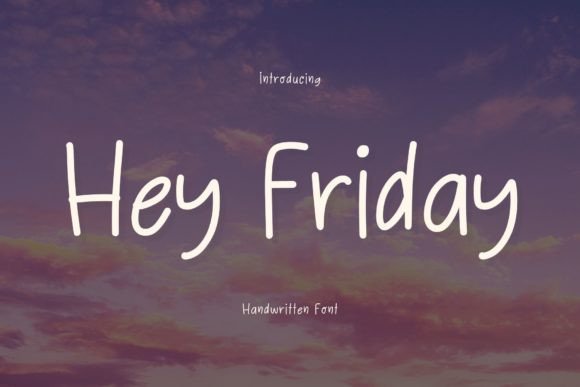
Hey Friday is more than just a font; it’s a mood. Its soft curves and uneven strokes give it an authentic, handcrafted feel that feels right at home in a variety of design projects. Whether you're working on a logo, a packaging label, or a social media graphic, this font brings a sense of playfulness without sacrificing readability.
One of the first things I noticed about Hey Friday was how well it balanced spontaneity with structure. It doesn’t look like it was designed by a machine—it feels like it was written by someone with a personal touch. That’s exactly what I needed for a brand that wanted to feel human and relatable.
When testing Hey Friday on a logo draft, I was struck by how versatile it could be. On its own, it made a bold statement, but when paired with a clean sans serif, it created a nice contrast that helped guide the eye through the design. The font’s natural flow made it easy to use as a headline or a tagline, while still maintaining a sense of warmth and familiarity.
I used Hey Friday on a few different elements of the café’s branding, from the business card to the menu headers. On a shop sign, it added a friendly, inviting vibe that made passersby want to stop and take a look. On a product label, it gave the packaging a handmade quality that felt genuine and trustworthy.
One of the things I appreciated most about Hey Friday was how it handled different sizes and formats. In a large header, it had enough detail to stand out, but it didn’t become too busy or hard to read. In smaller text, like a website footer or a social media caption, it still held up well without losing its character.
For a project like this, where the brand’s identity was all about being down-to-earth and welcoming, Hey Friday was a perfect fit. It helped create a visual language that felt consistent across all touchpoints, from digital assets to printed materials. The font’s personality reinforced the brand’s message without overpowering it.
When working with clients, I always recommend testing a font in real-world scenarios before committing to it. Hey Friday is no exception. I tried it on different backgrounds, in various weights, and even in multilingual contexts to make sure it would work in every situation. It handled everything with ease, which is a big plus for any designer looking for a reliable and expressive typeface.
If you’re thinking about using Hey Friday in your next project, consider how it might complement other fonts in your design system. Pairing it with a serif or a modern sans serif can help create a balanced and professional look. But don’t be afraid to let it shine on its own—sometimes the simplest approach is the most effective.
Hey Friday is a great example of how a handwritten font can add personality to a brand without feeling chaotic or unrefined. It’s a premium font that delivers on both style and function, making it a valuable addition to any designer’s toolkit. Whether you’re working on a logo, a packaging design, or a social media campaign, this font has the potential to elevate your work in a meaningful way.
As I wrapped up the café project, I couldn’t help but think about how much I enjoyed working with Hey Friday. It wasn’t just about finding the right font—it was about finding a typeface that felt like it belonged to the brand. And in the end, that’s what good design is all about: creating something that resonates with people and makes them feel connected.
For anyone looking to add a touch of authenticity and charm to their design work, Hey Friday is definitely worth a try. It’s a font that understands the power of a well-crafted letterform, and it’s ready to bring that same energy to your next creative project.